2 signs your kid has OCD, according to a child psychologist

thumbnail

The term “OCD” is often wrongly diagnosed to someone who has a strict morning routine or keeps an organized desk.

Having OCD, or obsessive compulsive disorder, has little to do with your cleaning habits or lack of flexibility and more to do with your ability to handle unpleasant thoughts, says Irina Gorelik, a child psychologist at Williamsburg Therapy Group.

“If any of us get a thought that’s disturbing, we could potentially move on from it,” she says. “But for someone with OCD, it causes a really distressing response and so they want to do a behavior that makes the thought go away.”

Think of the disorder in two parts, Gorelik says:

  1. Obsession: intrusive thoughts, urges, or images, that cause distress and are unwanted 
  2. Compulsion: the behavior that is used to reduce the level of distress brought on by the obsession 

In children, it’s usually easy to diagnose, she says, because it presents in noticeable ways.

Here are two signs your child might have OCD and tips for how to support them.

2 signs your child has OCD

They need reassurance about their safety and yours

Your child might repeatedly ask you if they are going to be okay, even if they are not going to be in any obvious or immediate danger. The same goes for their loved ones.

“I’ve had patients who’ve worried that something bad might happen to their family, so the compulsion is to check in on their family repeatedly,” she says. “They might say ‘I love you’ but not in a normal way, in a way that feels like they need to say it.”

Some other symptoms to look out for include:

  • A fear of germs and compulsive hand washing
  • Constant worry about getting sick
  • Excessive clinginess. For example, they don’t want to go to a sleepover because they think something might happen to you or them if you aren’t together

They need reassurance they haven’t hurt anyone

Just like how a child with OCD might worry about themselves or their family being hurt, they might also worry that they’ve hurt others.

Some specific symptoms might include:

  • Confessing a bad thought, like a curse word or about hurting someone.
  • Asking “Do you still love me?” repeatedly

Some parents actually feed OCD anxiety

For diagnosis, Gorelik says these obsessions and compulsions are typically time-consuming. They might take up an hour or more a day.

The compulsion acts as a “band aid” over the obsession, Gorelik says. And as a parent, you might want to comfort your child.

“It might come naturally to parents to reassure your kids and say, ‘you’re not hurt. No one is hurting you,’ but that’s actually feeding the anxiety,” she says.

It would be more helpful to tell your child that being worried is normal and that you can sit with that worry and choose not to engage in a compulsion.

For example, having the thought that your parents might be in danger is obviously anxiety-producing. But, that doesn’t mean you have to call your parents every 10 minutes. Let the feeling pass.

“Learn to sit with the thoughts and tolerate the thoughts, she says.

 Sign up now: Get smarter about your money and career with our weekly newsletter

Don’t miss:

Parents should consider schools in these 12 states if their kid’s mental health is a top priority

4 books to help you conquer your social anxiety, recommended by therapists


Study provides better understanding how OCD develops, may enhance treatment

To better understand the root of obsessive-compulsive disorder, researchers used a behavioural model. They demonstrated that when learning parameters for reinforcement and punishment are excessively unbalanced, the cycle between obsession and compulsion can be intensified. This research has the potential to improve mental health therapies.

Scientists from the Nara Institute of Science and Technology (NAIST), Advanced Telecommunications Research Institute International, and Tamagawa University have demonstrated that obsessive-compulsive disorder (OCD) can be understood as a result of imbalanced learning between reinforcement and punishment. On the basis of empirical tests of their theoretical model, they showed that asymmetries in brain calculations that link current results to past actions can lead to disordered behaviour.

Specifically, this can happen when the memory trace signal for past actions decays differently for good and bad outcomes. In this case, “good” means the result was better than expected, and “bad” means that it was worse than expected. This work helps to explain how OCD develops.

OCD is a mental illness involving anxiety, characterized by intrusive and repetitious thoughts, called obsessions, coupled with certain repeated actions, known as compulsions. Patients with OCD often feel unable to change behaviour even when they know that the obsessions or compulsions are not reasonable. In severe cases, these may render the person incapable of leading a normal life. Compulsive behaviours, such as washing hands excessively or repeatedly checking whether doors are locked before leaving the house, are attempts to temporarily relieve anxiety caused by obsessions. However, hitherto, the means by which the cycle of obsessions and compulsions becomes strengthened was not well understood.

Now, a team led by researchers at NAIST has used reinforcement learning theory to model the disordered cycle associated with OCD. In this framework, an outcome that is better than predicted becomes more likely (positive prediction error), while a result that is worse than expected is suppressed (negative prediction error). In the implementation of reinforcement learning, it is also important to consider delays, as well as positive/negative prediction errors. In general, the outcome of a certain choice is available after a certain delay. Therefore, reinforcement and punishment should be assigned to recent choices within a certain time frame. This is called credit assignment, which is implemented as a memory trace in reinforcement learning theory.

Ideally, memory trace signals for past actions decay at equal speed for both positive and negative prediction errors. However, this cannot be completely realized in discrete neural systems. Using simulations, NAIST scientists found that agents implicitly learn obsessive-compulsive behavior when the trace decay factor for memory traces of past actions related to negative prediction errors (n-) is much smaller than that related to positive prediction errors (n+). This means that, from the opposite perspective, the view of past actions is much narrower for negative prediction errors than for positive prediction errors. “Our model, with imbalanced trace decay factors (n+ gt; n-) successfully represents the vicious circle of obsession and compulsion characteristic of OCD,” say co-first authors Yuki Sakai and Yutaka Sakai.

To test this prediction, the researchers had 45 patients with OCD and 168 healthy control subjects play a computer-based game with monetary rewards and penalties. Patients with OCD showed much smaller n- compared with n+, as predicted by computational characteristics of OCD. In addition, this imbalanced setting of trace decay factors (n+ gt; n-) was normalized by serotonin enhancers, which are first-line medications for the treatment of OCD. “Although we think that we always make rational decisions, our computational model proves that we sometimes implicitly reinforce maladaptive behaviours,” says the corresponding author, Saori C. Tanaka.Although it is currently difficult to identify treatment-resistant patients based upon their clinical symptoms, this computational model suggests that patients with highly imbalanced trace decay factors may not respond to behavioural therapy alone. These findings may one day be used to determine which patients are likely to be resistant to behavioral therapy before commencement of treatment.

(Only the headline and picture of this report may have been reworked by the Business Standard staff; the rest of the content is auto-generated from a syndicated feed.)

Everything Amanda Seyfried Has Said About Her Struggles With OCD

From Justin Timberlake to David Beckham, many celebrities grapple with obsessive-compulsive disorder, as noted by Solara Mental Health. The stunningly transformed Amanda Seyfried is one of those celebrities.

The National Institute of Health describes obsessive-compulsive disorder as “a common, chronic, and long-lasting disorder in which a person has uncontrollable, recurring thoughts (obsessions) and/or behaviors (compulsions) that he or she feels the urge to repeat over and over.” In an interview with Allure, Seyfried opened up about how her fearful thoughts about fires kept her from putting a stove in her house.

“I always worry about people and how they use stoves. Which is just a controlling thing,” the actress revealed. When asked if her worries were related to her OCD, Seyfried responded candidly. “Yes. About the gas. You could so easily burn down something if you leave the stove on.”

The “Mamma Mia!” star also described how a “pretty bad health anxiety” also stemmed from OCD, where she believed she “had a tumor in my brain.” “I had an MRI, and the neurologist referred me to a psychiatrist.” While the Academy Award nominee has been grappling with OCD for years, her experience with the mental illness has gotten better with time. “As I get older, the compulsive thoughts and fears have diminished a lot,” Seyfried told Allure. “Knowing that a lot of my fears are not reality-based really helps.”

New Adolescent Obsessive-Compulsive Disorder Program Addresses an Increased Need for Specialized Exposur

Compass Health Center is launching an Adolescent OCD and Complex Anxiety Disorder Program at its Oak Brook location

Newswire.com

In response to the growing need for targeted clinical services to treat Obsessive Compulsive Disorder (OCD) and other anxiety disorders in adolescents, Compass Health Center is launching its Adolescent OCD and Complex Anxiety Disorder Partial Hospitalization and Intensive Outpatient (PHP/IOP) program at its Oak Brook location on Sept. 6, 2022. The goal of this new program is to provide specialized, evidence-based treatment for OCD and anxiety disorders among adolescents ages 13-18 in the Western Suburbs.  

“Since settling into the community over the past year, we’ve seen more and more adolescents and their families in need of specialized services to treat OCD anxiety disorders including but not limited to social anxiety, school anxiety and school refusal,” said Katrina Shannon, LMFT, Director of Adolescent Program, Compass Health Center – Oak Brook. “We have seen the positive impact and outcomes of our adolescent OCD programming at both our Northbrook and Chicago locations and are eager to provide this effective and engaging treatment in Oak Brook.” 

OCD is a mental health diagnosis in which people experience recurring thoughts, ideas, and sensations (obsessions) that make them feel a strong urge to repeat specific actions or behaviors (compulsions). If not properly managed, these actions and behaviors can significantly interfere with an individual’s ability to function in their daily life. Complex Anxiety refers to those conditions/disorders that research shows best respond to Exposure and Response Prevention (ERP) as a treatment modality. These conditions include OCD, Social Anxiety, Panic Disorder, Separation Anxiety Disorders, Phobias and Illness Anxiety Disorder. 

OCD and anxiety disorders cause problems, not because they make people feel anxious, but because of how we as humans tend to respond to anxiety, by avoiding what causes the anxiety. This avoidance ends up causing more problems than it solves and results in deteriorating relationships, skipping school, academic difficulties, and family conflict. ERP systematically decreases the avoidance triggered by anxiety and prompts the patients to build more meaning and purpose into their lives, even if it requires them to feel anxious in the process. 

For those with OCD and anxiety disorders, the effects of the pandemic worsened symptoms, Time Magazine reports. “New research shows that OCD symptoms have gotten more severe for many people during the pandemic, and new diagnoses have increased.” In addition, a BMC Psychiatry study in 2020 found that nearly 45% of young people ages 7 to 21 experienced a worsening of overall OCD symptoms within the first pandemic year. 

“With the loss of their routines and their social lives, many adolescents expectedly struggled with their mental health during the pandemic. For teens with OCD or anxiety diagnoses, specialized treatment including an exposure plan is key to positive treatment outcomes,” said Meg Hoffman, LCSW, Associate Director of Adolescent OCD and Complex Anxiety Program, Compass Health Center – Northbrook. “Adolescents in our OCD Complex Anxiety Program learn evidence-based coping skills, participate in exposure and process groups, and engage in individual exposure therapy. Each patient works with a treatment team, including a psychiatrist or psychiatric nurse practitioner, an individual therapist, a family therapist and, during the school year, an education specialist toward their unique and mutually-established treatment plan goals.” 

Compass’s Adolescent OCD Complex Anxiety Program (PHP/IOP) provides therapy modalities rooted in daily ERP as well as Acceptance and Commitment Therapy (ACT), Cognitive Behavioral Therapy (CBT), Dialectical Behavior Therapy (DBT), and habit reversal training. Adolescents attend group therapy sessions and meet daily with an exposure therapist to address symptoms and triggers leading to avoidance and compulsions. Through these evidence-based therapies, adolescents learn to tolerate distressing thoughts and physical sensations so that they can more fully and meaningfully engage in their daily lives. Programming is now available at all Compass onsite locations. Visit Compass Health Center’s website or call now for an intake.  


Newswire.com


New Adolescent Obsessive-Compulsive Disorder Program Addresses an Increased Need for Specialized Exposure and Response Prevention Therapy in Chicago Suburbs

What Is Shopping Addiction? Causes, Diagnosis, Treatment, and More

German psychiatrist Emil Kraepelin first defined “shopping addiction” in the early 1900s, per a 2012 review (PDF). He dubbed this disorder as “oniomania,” from the Greek words onios, (meaning “for sale”) and mania (meaning “madness”). It was defined as a type of impulsive behavior similar to kleptomania. Since then, people have used “shopping addiction” interchangeably with related terms such as “compulsive shopping,” “compulsive buying,” and “uncontrolled buying” to describe this behavioral disorder.

Problematic shopping addiction or compulsive buying, for example, is when a person continues to buy new things, regardless of whether they can afford them, says Pareen Sehat, a registered clinical counselor and clinical director at Well Beings Counselling in Vancouver, British Columbia, Canada. “They may face financial difficulties, but these negative effects still don’t stop them from shopping.”

Experts point out that the emotions experienced during compulsive buying — the urge to buy, the loss of control, and subsequent short-term positive feelings — are similar to those of a drug addiction. “The individual with a shopping addiction experiences the same rush or ‘high’ from buying things as someone who abuses drugs,” explains Holly Schiff, PsyD, a licensed clinical psychologist for Jewish Family Services of Greenwich in Connecticut. “The brain then associates shopping with this pleasure and the person wants to try and recreate it again and again.”

Today, many mental health providers do recognize compulsive buying as a behavioral problem. But it’s important to point out that the latest update of the Diagnostic and Statistical Manual of Mental Disorders, Fifth Edition (DSM-5) — the guidelines published by the American Psychiatric Association (APA) for diagnosing clinical mental health disorders — does not include it as a diagnosable disorder. A 2014 review has suggested that this is due to a lack of clear criteria to diagnose the behavior. In a 2021 statement, the APA noted that it’s still unclear how to classify a true shopping addiction — and that shopping addiction may be a sign of a psychiatric or behavioral disorder, rather than a disorder in its own right. (Other research has noted that shopping addiction often happens alongside psychiatric and behavioral conditions, including anxiety disorders, mood disorders, eating disorders, and substance use disorders.)

So while someone might experience addictive-like behaviors associated with shopping, mental health professionals are more likely to diagnose this as a behavioral problem associated with other mental health conditions, and not as a separate mental illness. It’s important to keep this in mind as we further explore shopping addiction throughout the rest of this article.

Finally, while the debate around how to classify shopping addiction is ongoing, it’s important to restate that a fondness for shopping is not the same as a shopping addiction. And if you notice that your shopping has become a frequent habit, that doesn’t mean that you’re addicted either. But if you have concerns about your shopping habits, there are certainly steps you can take to address them — more on that below.

Frailty in individuals with depression, bipolar disorder and anxiety disorders: longitudinal analyses of all-cause mortality – BMC Medicine

Study population

The UK Biobank is a prospective study of more than 500,000 middle-aged and older adults (aged 37 to 73 years; target age range: 40 to 69 years), who were recruited between 2006 and 2010. The study rationale and design have been described elsewhere [23]. Briefly, individuals registered with the UK National Health Service (NHS) and living within a 25-mile (~40 km) radius of one of 22 assessment centres were invited to participate. Participants provided data on their sociodemographic characteristics, health behaviours and medical history and underwent physical examinations. Linked hospital inpatient records are available for most participants and primary care records are available for half of the participants. A third of the participants also completed an online follow-up mental health questionnaire (MHQ) between 2016 and 2017.

Mental disorders

We identified individuals with a lifetime history of depression, bipolar disorder or anxiety disorders using criteria that we have reported elsewhere [13,14,15]. Cases were ascertained from multiple data sources: the modified Composite International Diagnostic Interview Short Form (CIDI-SF), self-report questions on (hypo)mania and a question on psychiatric diagnoses (UK Biobank data field 20544) which were assessed as part of the MHQ; the nurse-led baseline interview in which participants reported medical diagnoses (field 20002); hospital inpatient records (ICD-10 codes); primary care records (Read v2 or CTV3 codes) and self-report questions on mood disorders from the baseline assessment (field 20126). Individuals with psychosis were excluded from all cases and individuals with bipolar disorder were excluded from anxiety disorder cases due to their increased risk of physical multimorbidity [24, 25]. The depression and bipolar disorder groups were mutually exclusive, but individuals could be included in both the anxiety disorder and the depression group. Individuals could have had other psychiatric comorbidities (e.g. substance use or eating disorders), however these were not the focus of this study.

A non-psychiatric comparison group included individuals who had no mental disorders: (i) had not reported “schizophrenia”, “depression”, “mania / bipolar disorder / manic depression”, “anxiety / panic attacks”, “obsessive compulsive disorder”, “anorexia/bulimia/other eating disorder”, “post-traumatic stress disorder” at the nurse-led interview; (ii) reported no psychiatric diagnoses on the MHQ; (iii) reported no current psychotropic medication use at baseline (field 20003) [26]; (iv) had no ICD-10 Chapter V code in their hospital inpatient record, except for organic causes or substance use; (v) had no diagnostic codes for mental disorders in their primary care record [27]; (vi) were not classified as individuals with probable mood disorder at the baseline assessment; (vii) had no Patient Health Questionnaire-9 (PHQ-9) or Generalised Anxiety Disorder Assessment (GAD-7) sum score of ≥ 5; (viii) did not report that they ever felt worried, tense or anxious for most of a month or longer (field 20421); and (ix) were not identified as cases based on the CIDI-SF and questions on (hypo)mania [13, 15].

Frailty phenotype

We derived the Fried frailty phenotype [1], adapted for the UK Biobank [28, 29]. Participants provided data on weight loss, exhaustion, physical activity and walking speed via touch-screen questionnaires at the baseline assessment (Additional file 1: Table S1). Hand-grip strength in whole kilogramme-force units was measured using a Jamar J00105 hydraulic hand dynamometer. We used the maximal grip strength of the participant’s self-reported dominant hand. If no data on handedness were available or the participant was ambidextrous, we used the highest value of both hands [30]. All variables were coded as zero or one and summed up. Participants with a total score of three or more were classified as frail, while participants with a total score of one or two and zero were classified as pre-frail and non-frail, respectively [1]. Participants with missing data for at least one criterion were excluded.

Frailty index

We also derived a frailty index, following the procedure previously used in the UK Biobank [31]. Health deficits included in this index met the following criteria: indicators of poor health, more prevalent in older individuals, neither rare nor universal, covering multiple areas of human functioning and available for ≥ 80% of participants. The index included 49 variables obtained via touch-screen questionnaires and nurse-led interviews at the baseline assessment, including cardiometabolic, cranial, immunological, musculoskeletal, respiratory and sensory traits, well-being, infirmity, cancer and pain (Additional file 1: Table S2). Categorical variables were dichotomised (no deficit = 0; deficit = 1), and ordinal variables were mapped onto a score between zero and one. The sum of deficits present was divided by the total number of possible deficits, resulting in frailty index values between zero and one, with higher values reflecting greater levels of frailty [32, 33]. Participants with missing data for ≥ 10 variables were excluded [31]. Participants with a frailty index value of ≤ 0.08 were classified as non-frail, while participants with values between 0.08–0.25 and ≥ 0.25 were classified as pre-frail and frail, respectively [34].

Ascertainment of mortality

The date of death was obtained through linkage with national death registries, NHS Digital (England and Wales) and the NHS Central Register (Scotland). The censoring date was 28 February 2021. The most recent death was recorded for 23 March 2021, although the data were incomplete for March 2021.

Covariates

Covariates were identified from previous studies and included age, sex, ethnicity (White, Asian, Black, Chinese, Mixed-race or other) and highest educational/professional qualification (four levels, reflecting similar years of education [35]: college/university degree; education to age 18 or above, but not reaching degree level (“A levels”/“AS levels” or equivalent, NVQ/HND/HNC or equivalent, other professional qualifications); education to age 16 qualifications (“GCSEs”/“O levels” or equivalent, “CSEs” or equivalent; no qualifications), Townsend deprivation index, which is a small-area level measure of socioeconomic status [36], cohabitation with spouse or partner (yes/no) [37], smoking status (never, former or current), alcohol intake frequency (never, special occasions only, one to three times a month, once or twice a week, three or four times a week, or daily or almost daily), systolic and diastolic blood pressure (mmHg), body mass index (BMI, kg/m2), cholesterol (mmol/L), multimorbidity count (zero, one, two, three, four, five or more) and assessment centre.

Statistical analyses

All statistical analyses and data visualisations were done in R (version 3.6.2).

Sample characteristics were summarised using means and standard deviations or counts and percentages. Differences in the frailty index between individuals with and without mental disorders were estimated using standardised mean differences ± 95% confidence intervals (CI) and ordinary least squares regression models. Group differences in the frailty phenotype (non-frail, pre-frail and frail) were estimated using ordinal logistic regression models. We fitted both unadjusted and fully adjusted models. Age-related differences in the frailty index were estimated using generalised additive models within the ‘mgcv’ package [38] in R.

We calculated person-years of follow-up and the median duration of follow-up of censored individuals. Unadjusted survival probabilities by frailty level and case status were estimated using the Kaplan-Meier (KM) method [39]. Hazard ratios (HRs) and 95% confidence intervals were estimated using Cox proportional hazards models [40] to examine associations between frailty and mortality by case status. Age in years was used as the underlying time axis, with age 40 as the start of follow-up. We fitted both unadjusted and fully adjusted models. Non-frail individuals without mental disorders were the reference group. We estimated the percentage risk difference between individuals with and without mental disorders at the pre-frailty and frailty levels using the formula: (HRdisorder – HRno disorder)/(HRno disorder − 1) × 100.

Adjusted P-values were calculated using the p.adjust function in R to account for multiple testing. P-values from the regression models were corrected for six tests (one parameter × two models × three disorders) and p-values from the Cox proportional hazards models for 30 tests (five parameters × two models × three disorders). Two methods were used: (1) Bonferroni and (2) Benjamini and Hochberg [41], two-tailed, with α = .05 and a 5% false discovery rate, respectively. We have opted for this approach because the Bonferroni correction may be too conservative and lead to a high number of false negatives.

Additional analyses

We repeated our main analyses of group differences in frailty and of all-cause mortality stratified by sex. As a sensitivity analysis, we repeated the analyses of all-cause mortality after excluding individuals with comorbid depression and anxiety disorders. Finally, we examined all-cause mortality in individuals with comorbid depression and anxiety disorders.

Sleep Problems in Adolescents and Children with OCD

There is a connection between obsessive-compulsive disorder (OCD) and sleep issues in young individuals, and a theoretical framework has been developed to explain how these diseases can reinforce 1 another. The model’s underlying hypothesis contends that OCD symptoms shorten sleep time (for example, through increased arousal and later bedtime), which worsens OCD symptoms during the day and into the evening and reinforces the idea. The current inflow of data on sleep issues in young OCD sufferers may or may not be consistent with this hypothesis. The main goals of this systematic review were to describe sleep issues in young OCD patients and assess whether more recent data were consistent with more established theoretical hypotheses. The results of 20 research showed a significant prevalence of sleep issues in young OCD patients and provided evidence for a reciprocal association. Because studies usually did not evaluate the hypothesized relationships it proposed, the model has only tepid support. A secondary goal was to evaluate the effects of co-morbidities and the developmental stage. According to research, comorbid anxiety disorders may first cause sleep issues in children, but with time, they start to maintain each other. As people get older, comorbid depression seems to get worse. Future directions, constraints, and clinical implications are considered.

Source: sciencedirect.com/science/article/abs/pii/S0887618522000640

SO-OCD: Definition, Symptoms, and Treatment Options

Obsessive-compulsive disorder (OCD) is a chronic mental health condition in which a person experiences upsetting repetitive thoughts (obsessions) as well as ritualistic behaviors that are repeated over and over (compulsions). There are different subtypes of OCD, and it can present in a variety of ways.

Questioning your sexual orientation and exploring your sexuality are both normal and healthy things, but if the questioning becomes intrusive and distressing and is accompanied by repetitive behaviors, it might be sexual orientation OCD (SO-OCD).

Read on to find out more about SO-OCD and how it’s treated.

Business is putting him in a bad mood

Business is putting him in a bad mood

PeopleImages / Getty Images

What Is Sexual Orientation OCD?

SO-OCD used to be referred to by the now-outdated term homosexual OCD (HOCD). It is marked by intrusive thoughts and compulsions around sexual orientation.

A person with SO-OCD constantly agonizes over their sexuality and may also worry that others perceive them as having a different sexual orientation than the one they identify with. These obsessive thoughts are unwanted and are different from sexual thoughts that the person finds pleasurable.

In response to their obsessive thoughts, the person may engage in compulsive behaviors like looking at pictures to “test” whether or not they become aroused, excessively seeking reassurance from others, or avoiding standing too close to or touching others.

SO-OCD vs. Questioning Your Sexuality

Many people explore their sexuality and question their sexual orientation, but SO-OCD is different. The thoughts and behaviors that accompany SO-OCD are intrusive, disruptive, and take up more than an hour a day. They often trigger feelings of guilt and shame, too.

Signs and Symptoms of SO-OCD

Common intrusive thoughts and compulsive behaviors in SO-OCD can include:

  • Doubting your sexual orientation even though you have no rational reason to do so
  • Ruminating about past sexual experiences and social interactions
  • Compulsive fantasizing about different sexual behaviors to see if you become aroused
  • Persistent worry you are sending out “signals” that make others think you are of a different sexual orientation than you are
  • Excessively seeking reassurance from others
  • Avoiding social situations where you may need to stand near and could potentially touch other people

Treatment for SO-OCD

The treatment for SO-OCD is similar to what’s used for other types of OCD. But each person is different, and treatment plans can vary.

Exposure and Response Prevention

Exposure and response prevention (ERP), a type of cognitive behavioral therapy (CBT), is typically the first-line therapy for OCD. This type of therapy exposes the individual to their anxiety triggers while also preventing them from performing compulsive behaviors.

This helps teach them how to tolerate distress; they also learn healthier ways to manage their anxiety when obsessive thoughts crop up. The goal is to break the obsession-compulsion cycle.

OCD Support Groups

An OCD support group could help you feel better understood and less lonely. It isn’t a substitute for individual therapy, but it can be a helpful component of your treatment plan. People who understand what it’s like to live with SO-OCD and the accompanying obsessions and compulsions can validate your experiences while sharing advice on how to manage the condition.

Diet and Lifestyle Changes

Research has shown that lifestyle factors such as diet and exercise can influence how successful the treatment of an anxiety disorder is.

Regular exercise can help with stress relief, and a healthy diet can have a positive effect on mental health. Talk with your healthcare provider about lifestyle changes you can make that could benefit both your body and mind.

Mindfulness Exercises

Mindfulness is sometimes part of the therapy for OCD. It focuses on paying attention to the thoughts and feelings of the present moment, without assigning judgment or analysis. By calmly accepting them and letting them pass, you may eventually become less dependent on compulsions to relieve anxiety.

Deep breathing and meditation are two good ways to get started with practicing mindfulness.

Stress Management

Stress can often make symptoms of OCD worse, and many people report that a stressful or traumatic incident was a trigger for their OCD.

In addition to the lifestyle changes and mindfulness exercises mentioned above, ways to manage stress include:

  • Get enough sleep.
  • Avoid excessive use of alcohol or recreational drugs.
  • Maintain connections with others.

Summary

SO-OCD is marked by intrusive thoughts and compulsive behaviors around questioning one’s sexual orientation. This isn’t healthy, normal questioning of sexual orientation: The obsessions and compulsions are unwanted and distressing, and they take up more than an hour a day. The gold standard treatment for SO-OCD, like all types of OCD, is ERP, but support groups, mindfulness exercises, diet and lifestyle changes, and stress management may also be helpful.

A Word From Verywell

It’s normal for people to question their sexual orientation, and doing so can bring up uncomfortable feelings from time to time. The difference with SO-OCD is that it’s marked by upsetting obsessions and compulsions that can interfere with daily life. A good therapist and treatment team will be able to tell the difference between normal questioning of sexuality and SO-OCD.

Frequently Asked Questions

  • There is no single, definitive cause of OCD. Genetics, brain chemistry, and environmental factors are all thought to play a role. SO-OCD has long been understudied, and more research is needed.

  • SO-OCD involves obsessive and intrusive thoughts and accompanying compulsive behaviors to relieve the anxiety. These thoughts and behaviors are time-consuming, taking up at least an hour a day, and they can disrupt your daily life. This makes it different from the typical questioning of or denying your sexual orientation.

  • It’s not known for certain how common SO-OCD is, but initial studies have found that about 25%–30% of those with OCD report having sexual obsessions. SO-OCD is not always well-understood by mental health professionals, so it’s possible these numbers are underreported.


Prevalence of Anxiety Disorder in Adolescents in India: A Systematic Review and Meta-Analysis

Methodology

Eligibility Criteria

All cross-sectional studies published since 1990 where the prevalence of any type of anxiety disorder was estimated were included in the study. We included all the studies where the age group of the sample population belonged to 10-19 years. If more than 50% of the sample belonged to the 10-19 years of age group, then those studies were also included. The studies that reported any type of anxiety disorder such as generalized anxiety disorder, OCD, PTSD, panic disorder, and social phobia (or social anxiety disorder) were included. We excluded all other studies that did not fulfill the inclusion criteria.

Search Strategy

We searched Medline and ProQuest databases for peer-reviewed articles. The search strategy was developed using combined terms related to anxiety, general anxiety, mental health, anxiety disorder, phobia, stress, obsession, panic, India, prevalence, cross-sectional, and burden. From ProQuest, only thesis and dissertations were chosen using the appropriate filter [8]. A detailed search strategy specific to both databases is mentioned in Supplementary 1.

Risk of Bias Assessment

The two dimensions of the Quality in Prognosis Studies (QUIPS) tool that are relevant to observational studies, (1) study participation and (2) study outcome, were used to assess the likelihood of bias in the articles included in the study [9]. Each domain’s evaluation yields a subjective estimate of bias risk (low, moderate, or high). The supplementary document provides the tool for risk of bias assessment (Supplementary 2).

Data Extraction

A data extraction sheet was used to extract the data regarding the authors’ name, study area, study participants, sampling strategy, age group, and prevalence. Simultaneously, the confidence interval (CI) was calculated and mentioned in the sheet. For most of the studies, the CI value was not mentioned in the original study, and therefore it has been calculated using a formula such as (p̂ +/- z* (p̂(1 – p̂)/n)0.5), where p̂ is prevalence, z value is 1.96, and n is the sample size. The risk of bias was also mentioned in the data extraction sheet.

Reliability

Two reviewers (D.P. and S.M.) checked the articles for the title and abstracted for selection of the studies in a blinded way. Rayyan web-based platform was used for this purpose. In case of any dispute regarding the inclusion of the study, the senior researcher (D.P.S.) took the final decision. All data extracted were checked by all three reviewers.

Analysis

We have provided a descriptive analysis of all the studies included in the meta-analysis. The I2 statistic, for the variance not due to sampling error across studies, was used to analyze heterogeneity between estimates. High heterogeneity is indicated by an I2 value of more than 75%. We included those papers in the meta-analysis where any form of diagnostic tool was used for detecting any type of anxiety illness in teenagers aged 10 to 19 years, as well as studies with more than half of the participants aged 10 to 19. The meta-analysis was carried out using the R program and a random-effects model (to account for heterogeneity). A 95% C) was derived for a pooled prevalence number. When the estimate for a study went toward either below 20% or above 80% in a meta-analysis of prevalence, log transformation was required for normalization of the distribution of prevalence of all studies. After log transformation, the final pooled result and 95% CIs were back-transformed for the final result. We used the Baujat test to find the study resulting in heterogeneity, and the outlier was removed once to find out the effect of the study in heterogeneity and pooled estimate. We used subgroup analysis on the basis of risk of bias, where we classified the studies having a high and moderate risk of bias and studies having a low risk of bias. We used Meta-Essentials for subgroup analysis.

Ethical issues

As this study analyzed data from studies available in the public domain, no ethical clearance was sought. This systematic review and meta-analysis was registered in PROSPERO before the initiation of the review (reference number: CRD42022345574).

Results

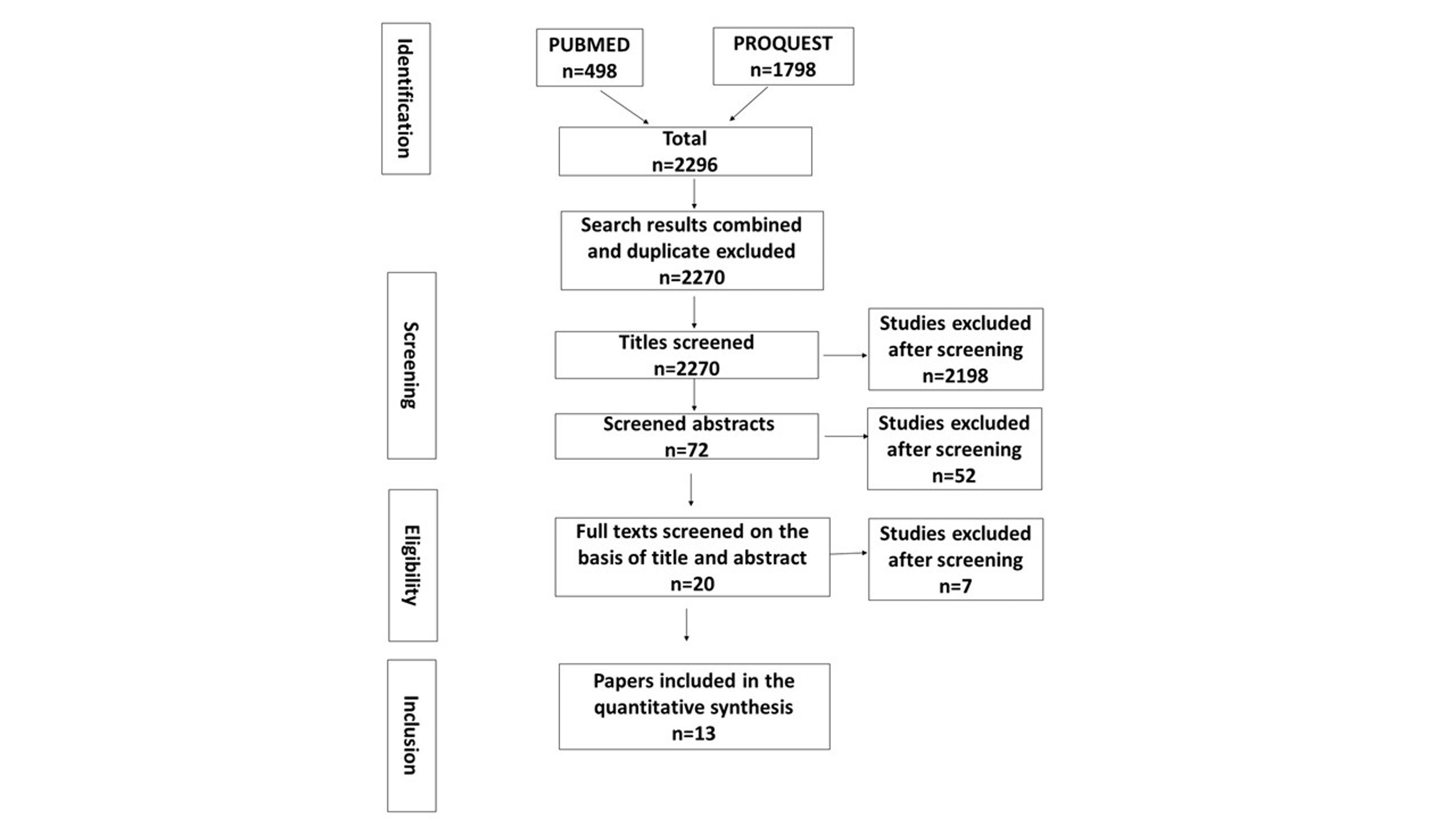
The search results returned a total of 2,296 articles from the two databases, and after exclusion of duplicates, 2,270 articles were considered for screening by titles. After screening for the titles, 72 articles were selected for screening by abstract. Among full-text screening for 20 articles, finally, 13 articles were selected for quantitative analysis (Figure 1). Two of the articles were excluded for being part of the same study, and five articles were excluded for being review articles.

Flow-chart-illustrating-the-process-by-which-articles-were-selected-or-rejected-for-inclusion-in-the-study

Included Studies

All of the included studies had a cross-sectional design. Three of the studies used the Screen for Child Anxiety Related Disorders (SCARD) tool [10-12]. DSM-5 and DSM-5 Text Revision (DSM-5 TR) were used in five studies [13-17]. The Depression, Anxiety and Stress Scale – 21 (DASS-21), Westside Test Anxiety Scale, and Test Anxiety inventory were the other tools used in the studies [18-21] (Table 1). In one study, one pre-tested questionnaire was used for diagnosing anxiety disorder [22].

Risk of Bias

All the studies were classified as high, moderate, and low risk on the basis of subjective assessment of studies using the QUIPS tool [23]. Bias in selecting participants and bias in outcome measurement were assessed for all included studies. One study was found to have a moderate risk of bias, and three studies had a high risk of bias. All of the other studies had a low risk of bias (Table 1).

Table
1: Description of the studies along with risk of bias assessment

DASS, Depression, Anxiety and Stress Scale; DSM, Diagnostic and Statistical Manual of Mental Disorders; MINI, Mini International Neuropsychiatric Interview

Meta-Analysis

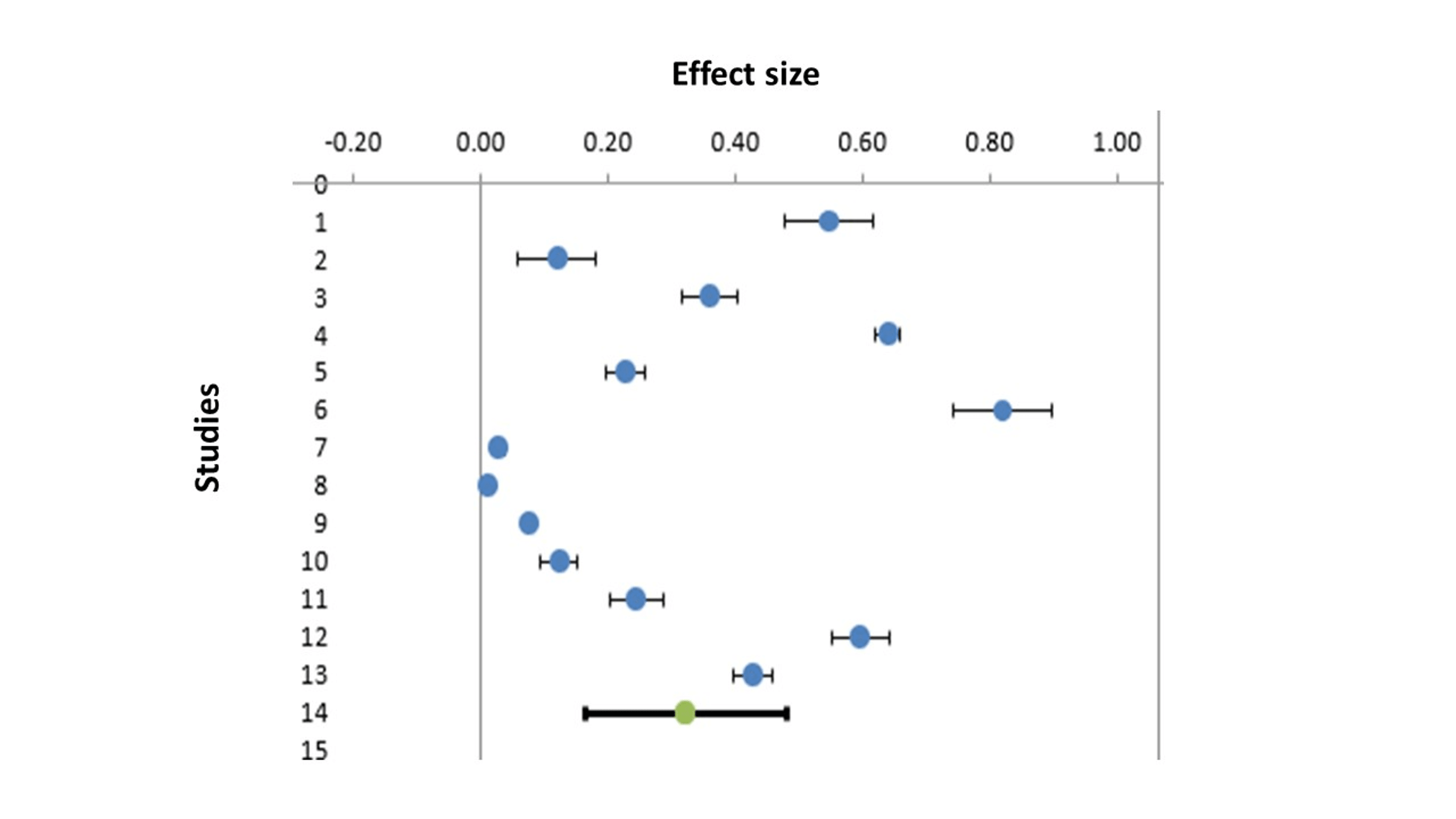
The pooled prevalence was found to be 0.23 with a CI of 0.11-0.41 (Figure 2). The I2 statistics was found to be significant, with a heterogeneity of 99.67%. As the variability was high, random effect model was used to calculate the pooled estimate. During subgroup analysis on the basis of risk bias, the pooled prevalence was found to be 0.41 (CI 0.14-0.96) for studies having more than low risk. The pooled estimate for the studies with low risk of bias is found to be 0.29 (CI 0.11-0.46). Table 2 shows the weightage of different studies with respect to pooled estimates (Table 2). The Baujat test has detected a study conducted by Pillai et al. as an outlier. After removing this study from the analysis, no significant change is detected in heterogeneity and pooled prevalence.

-Forrest-plot-showing-pooled-estimate

Table
2: Weightage of different studies in respect to pooled prevalence using random effect model

CI, confidence interval

Publication Bias

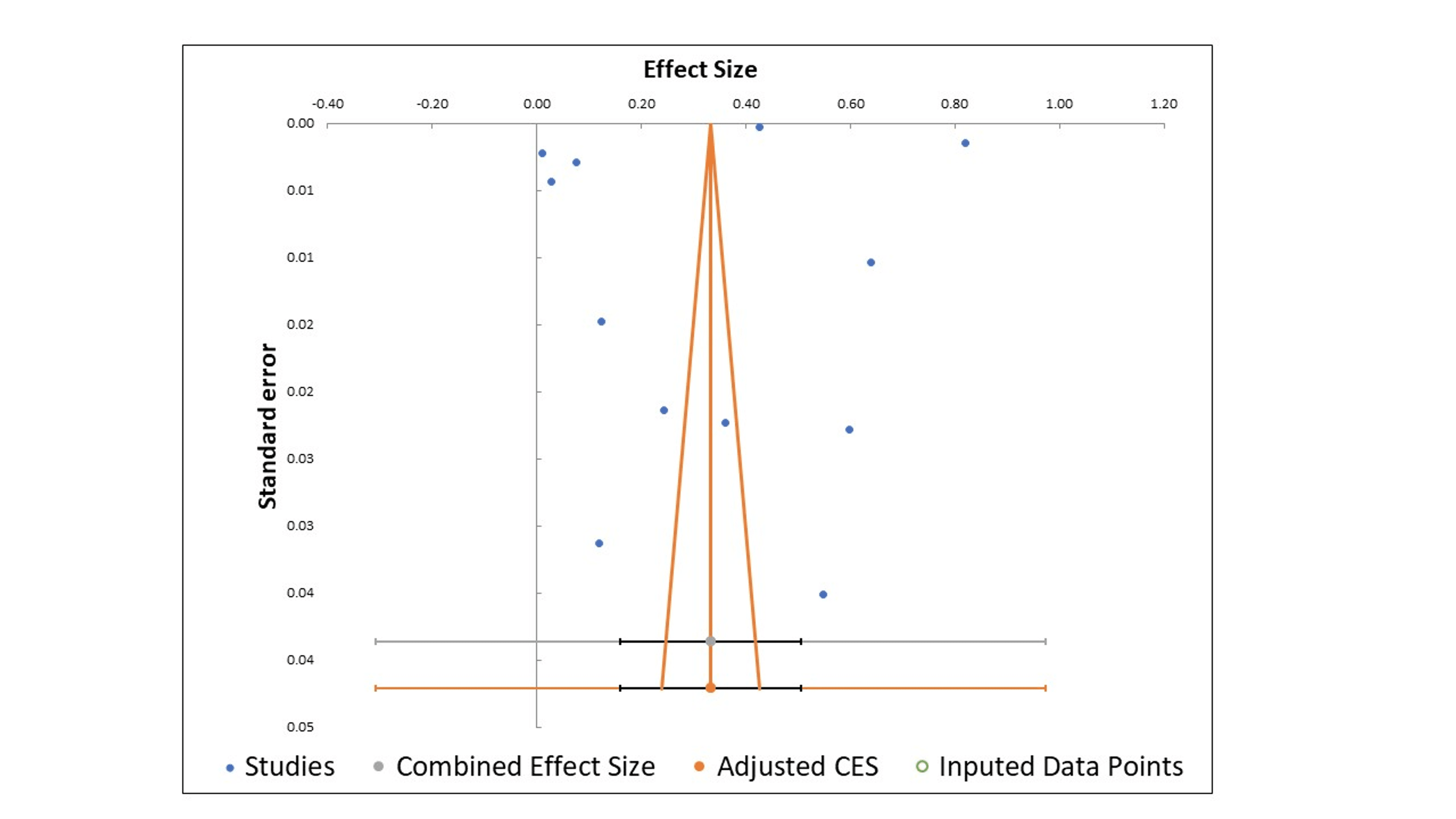
The Begg and Mazumdar rank correlation test found that the publication bias is not present in this meta-analysis (p=0.085). Figure 3 shows the funnel plot having a symmetrical distribution of studies with respect to standard error and effect size (Figure 3).

Funnel-plot-showing-publication-bias

Discussion

Out of the 13 studies, nine studies had a low risk of bias and rest of the studies had either moderate or high risk of bias. The pooled estimate for the studies with a low risk of bias was found to be 0.29 (CI: 0.11-0.46) and that for other studies it was 0.41 (CI: 0.14-0.96). The random effect model was used to find out the pooled prevalence as high level of heterogeneity was present among studies. No tool exists for the objective assessment of the quality of bias of cross-sectional studies. Two domains of the QUIPS tool relevant to cross-sectional studies were used here for subjective assessment of bias. This tool was piloted by other authors for the same purpose and was previously used in one meta-analysis [24]. This tool also followed the guidelines of Cochrane collaboration [25]. The prevalence value in different studies can be attributed to different reasons such as type of study population, type of study tool, and type of sampling strategy. Meta-regression analysis could have been conducted to find out those factors. The prevalence of anxiety among adolescents varies in a wide range in different countries. In the USA, approximately 30% of adolescents suffer from some type of anxiety disorder [26]. Among the south-east Asian countries, the prevalence of anxiety in adolescents varies from 21.4% in Pakistan to 9% in Bhutan [27,28]. In the USA, unemployment and substance abuse are found to be significant risk factors for anxiety in adolescents [29]. Poverty and social instability play a crucial role in Pakistan [30]. In Bhutan, the prevalence of substance abuse is found to be lower than that in the USA or Pakistan [29-31]. Those risk factors are prevalent in India also, which lead to similar kind of result in comparison with the USA or Pakistan [32]. This study would help find out the burden of anxiety disorders In India in the pre-COVID-19 era, which has been grossly aggravated due to the COVID-19 pandemic. The COVID-19 pandemic has been found to be a significant risk factor for causing anxiety disorder [33,34].

Strengths

Our study helps get an overview of the burden of anxiety disorders in India, as studies from almost every part of India were included in the analysis. Both types of population such as school students and non-school going children were included in those studies.

Limitations

We did not have access to some databases such as OVID, Embase, Web of Science, and Scopus due to financial constraints. Though we have included two databases as per the requirement prescribed by the Cochrane collaboration group, other databases were not screened.

7 Celebrities With OCD

The star of Netflix’s Lady Dynamite, Maria Bamford, has been very candid about having OCD. In fact, as a comedian, she often turns to humor to talk about life with OCD, as well as her struggles with bipolar disorder and suicidal thoughts.

In a 2016 interview with NPR, Bamford described OCD like this: “What it is, it’s the equivalent of, you know, washing your hands, thinking that you’re going to be dirty or that you’re somehow dirty, but it’s with thoughts. So as soon as you try to not think of the thought, the thought pops up again so —  ’cause most of us have weird thoughts floating through our heads every once in a while.”

Bamford said she recalled having obsessive thoughts as early as age 9. “I stopped being able to sleep at night ’cause I had fear that I was going to kill my parents, you know, act out violently in some sort of taboo way. And it’s even hard for me to say now, act out sexually, toward something, somebody, and so I wanted to isolate so that I would not be around people at all and would stay up all night making sure that I just wouldn’t fall asleep and somehow lose control,” she explained.

In 2014, Bamford received the inaugural Illumination Award from the International OCD Foundation — an award given to influencers and media personalities who’ve talked about OCD and related disorders in an accurate and respectful way.